
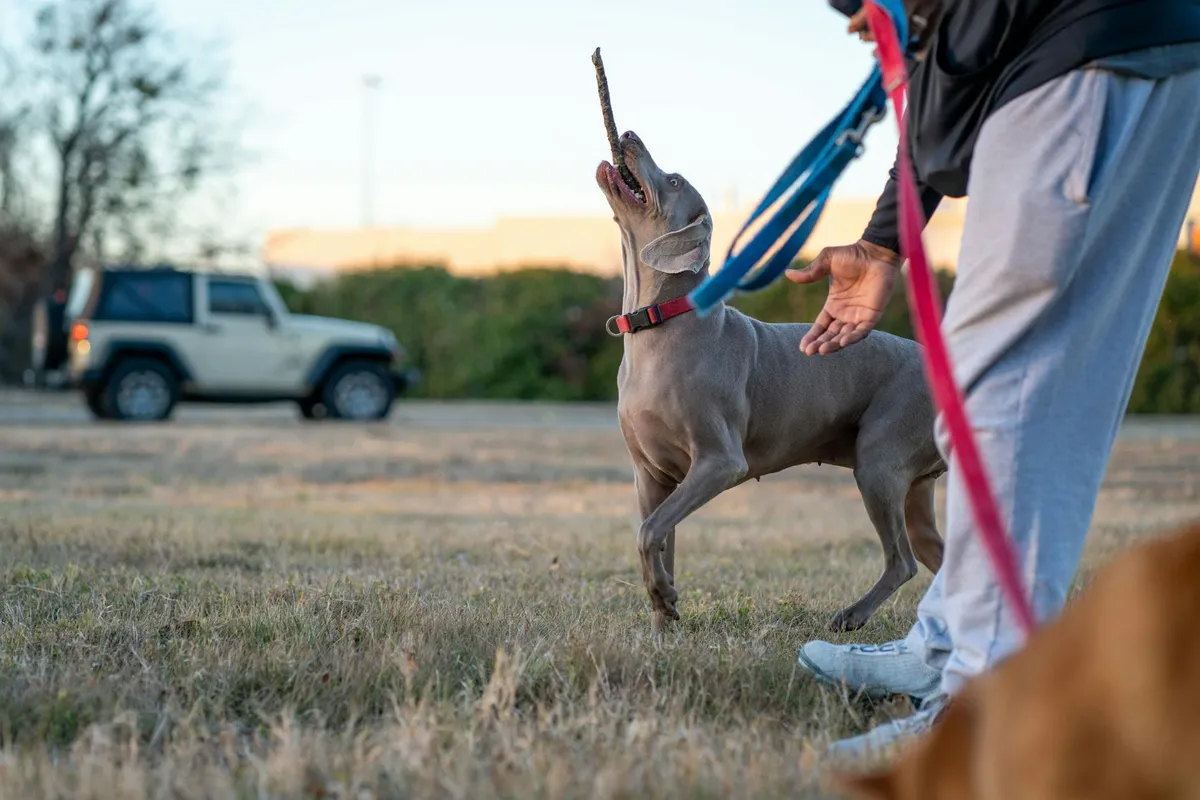
My third rescue dog Hazel came home with a list of issues. Reactive on leash. Resource-guarding. Severe noise sensitivity. Selective attention to recall. The shelter had been honest about all of it. I thought I was prepared.
The standard "positive reinforcement, lots of treats, consistent schedule" advice that had worked for my first two dogs did not work for Hazel. Eighteen months of trying different approaches taught me what does and does not work for a dog who is not the standard case.
This is what I tried, what worked, what made things worse, and what I would do differently with another difficult dog.
Approach 1: Standard positive reinforcement
I started where I started with my other dogs. Treats for desired behaviors. Marker words. Clicker training. Consistent rewards.
This worked for some things — sit, down, basic recall in low-distraction environments. It did not work for the harder issues. Hazel was too aroused on leash to engage with treats when she was reacting. She was too anxious during noise events to take food at all. The reactive behaviors were not getting better with treat-based counter-conditioning the way the books said they should.
I think the failure was not the approach itself but the context. Standard positive reinforcement works well when the dog is calm enough to think. Hazel was past the threshold of being able to think for the issues that mattered most. The treats were ineffective because she was already too aroused to want them.
Approach 2: Aversive training (briefly)
Out of frustration after about four months, I tried using a citronella collar for the leash reactivity. I had read that some difficult dogs respond to it. I felt awful about it but I was running out of ideas.
It did not work and it actively made things worse. Hazel got more anxious overall. The reactivity did not decrease in a sustained way. She started showing avoidance of me when I picked up the leash because she associated the leash with the citronella now.
I stopped using it within a week. The aversive approach failed in exactly the ways the people who oppose aversive training had warned. It suppressed some surface behavior briefly while making the underlying anxiety worse and damaging my relationship with the dog. I will not do this again.
Approach 3: Working with a behaviorist
About six months in I hired a certified veterinary behaviorist. This was expensive. It was also the most useful single thing I did for Hazel.
The behaviorist did not give me a magic technique. What they did was help me actually see what was happening with Hazel. They identified that the reactivity was not really a leash issue — it was a generalized anxiety issue that manifested most visibly on leash. They identified that the resource guarding was related to a specific food insecurity pattern that probably traced to her shelter history. They helped me understand the noise sensitivity as a sensory processing issue rather than as a fear response.
With this framing the training I did made much more sense. I was not trying to train away leash reactivity; I was helping Hazel learn to manage anxiety. I was not trying to train away resource guarding; I was building food security so the guarding would not be triggered. The reframing changed everything about how I worked with her.
I would tell anyone with a difficult dog to consider a veterinary behaviorist consultation. Not a regular trainer — a behaviorist with veterinary credentials. The cost is real. The value can be substantial.
Approach 4: Medication (in combination with training)
The behaviorist suggested that for Hazel's level of anxiety, training alone was unlikely to be sufficient. They recommended trying anti-anxiety medication in combination with the behavioral work.
I was reluctant. I had a vague idea that medicating a dog was somehow giving up on training her. The behaviorist explained that for some dogs anxiety levels are high enough that they cannot learn effectively because they are spending too much cognitive capacity managing the anxiety. Medication can lower the anxiety enough to make learning possible. The medication is not a replacement for training; it is what makes training possible.
We tried fluoxetine. It took about six weeks to see effects. The effects were significant. Hazel was visibly less anxious in baseline state. She was able to engage with training in situations that had previously been over her threshold. The reactive behaviors started to actually respond to counter-conditioning the way they were supposed to.
I felt regret about not having tried this earlier. If I had a difficult dog now, I would discuss medication with a behaviorist much sooner. The framing of medication as failure is wrong. For some dogs it is the foundation that makes other interventions actually work.
Approach 5: Environmental management
The fifth thing I learned to do — and the thing that made the most day-to-day difference — was environmental management. Setting up Hazel's life so the situations that triggered her worst behaviors happened less often.
This meant changing how we walked. We walked in low-traffic areas at low-traffic times. We crossed the street to avoid other dogs rather than trying to work through every encounter. We used a basket muzzle for situations where it might be needed. We worked from a foundation of safety rather than from one of constant exposure.
This felt like cheating at first. The training advice I had read implied that you should expose the dog to triggers and work through them. The behaviorist explained that this approach makes sense for mild reactivity but is counterproductive for severe reactivity. A dog who is constantly being triggered is constantly in stress and is not learning to be calm; they are learning to expect threat.
Once I started managing the environment to keep Hazel below her threshold most of the time, her overall stress decreased. The training work I did during low-stress periods actually consolidated. The reactive behaviors decreased in intensity even though we were "exposing" her to triggers less often.
What actually worked, in order of importance
For Hazel, the things that actually worked, ranked by impact:
1. Working with a veterinary behaviorist who reframed what was going on.
2. Anti-anxiety medication that made training effective.
3. Environmental management to keep her below threshold most of the time.
4. Standard positive reinforcement training, applied during low-stress periods after the medication was working.
5. Time and patience over many months.
The aversive approach actively made things worse. The pure positive reinforcement without the other elements was insufficient. The combination of the right framing, appropriate medication, smart management, and consistent training is what worked.
What I would tell someone with a difficult dog
The standard advice on social media and in popular books is calibrated for the average dog. If your dog is not the average dog, the standard advice may not work and you should not blame yourself.
Get professional help earlier than you think you need to. A veterinary behaviorist consultation is expensive but is usually worth the cost for difficult cases.
Do not write off medication. For some dogs it is what makes everything else possible.
Manage the environment. You do not have to work through every trigger. Keeping the dog below threshold is a valid strategy, not a failure of training.
Be patient with the timeline. Difficult dogs take longer than the books suggest. Hazel took eighteen months to become a dog I could comfortably take to most places. She was always going to be a bit anxious; she was never going to be a calm dog. But she became a manageable dog with a good quality of life. That was the actual goal, not turning her into something she was not built to be.
And do not try aversive techniques. They sometimes look like they work in the short term and they almost always make things worse in the long term. The temptation to try them is understandable when nothing else is working. The right response to nothing else working is to get better professional advice, not to try the approach that has the worst evidence behind it.