
Understanding the specific characteristics and ecological roles of grassland animals offers a foundational dataset for content development in numerous niches, from educational platforms to wildlife conservation and even travel. Detailed knowledge about these species provides the granular information required to build authoritative content clusters, identify precise long-tail keywords, and craft compelling narratives. This depth moves beyond general overviews, enabling the creation of resources that cater to specific user intent, whether informational, research-driven, or comparative.
Defining Grassland Ecosystems
Grasslands are biomes dominated by grasses and herbaceous plants, characterized by semi-arid climates that prevent extensive forest growth but support more vegetation than deserts. These ecosystems cover approximately 20-40% of Earth's land surface, depending on classification, and are broadly categorized into temperate and tropical types, each hosting distinct animal communities with specialized adaptations.
- Temperate Grasslands: Found in mid-latitudes, experiencing cold winters and hot summers. Examples include the North American prairies, Eurasian steppes, and South American pampas.
- Tropical Grasslands (Savannas): Located closer to the equator, with warm temperatures year-round and distinct wet and dry seasons. The African savanna and Australian savannas are prime examples.
Temperate Grassland Inhabitants
Animals in temperate grasslands often exhibit adaptations for extreme temperature fluctuations and a reliance on grazing or predation within open, treeless environments. Their survival strategies frequently involve herd behavior, burrowing, or seasonal migration.
North American Prairies: Bison and Prairie Dogs
The North American prairies historically supported vast herds of American bison (Bison bison). These large herbivores are keystone species, their grazing patterns influencing plant diversity and soil health. Bison possess thick coats for winter insulation and a strong sense of smell to locate buried forage. Their social structure involves large herds, offering protection against predators like wolves.
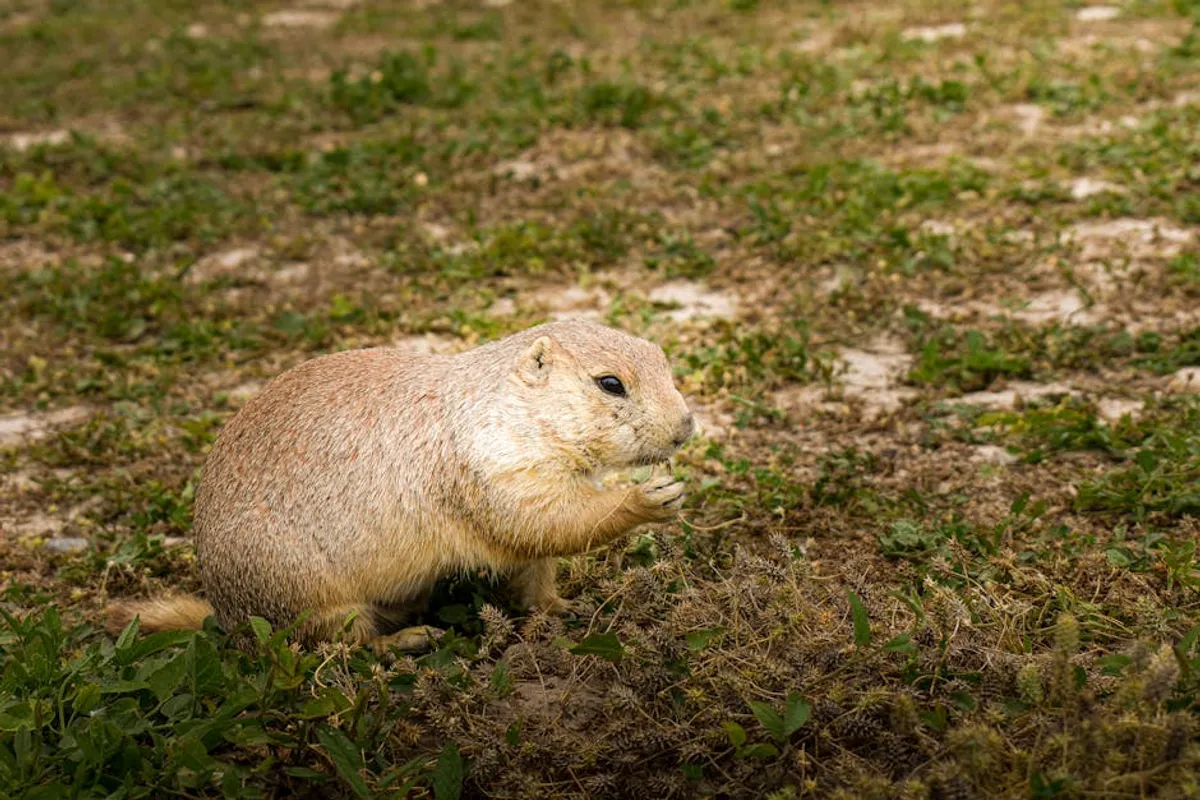
Prairie dogs (genus Cynomys), small burrowing rodents, are another iconic prairie species. They construct elaborate underground tunnel systems, providing shelter from predators and harsh weather. Their colonies are complex social units, with individuals sharing alarm calls and grooming behaviors. Prairie dog towns create microhabitats that benefit numerous other species, including burrowing owls and black-footed ferrets.
Eurasian Steppes: Saiga Antelope and Wild Horses
The Eurasian steppes, stretching from Eastern Europe to Central Asia, host unique species adapted to vast, open plains. The saiga antelope (Saiga tatarica) is notable for its distinctive, oversized, proboscis-like nose, which filters dust in summer and warms cold air in winter. Saigas are highly migratory, moving across immense distances in search of forage, often in large herds.
Wild horses, specifically Przewalski's horse (Equus ferus przewalskii), are native to these steppes. These horses are robust, adapted to cold winters and sparse vegetation, and live in small, stable family groups led by a dominant mare. Their grazing helps maintain the grassland structure, preventing shrub encroachment.
Tropical Grassland Biodiversity
Tropical grasslands, or savannas, are renowned for their high biodiversity, particularly large mammals. The distinct wet and dry seasons drive complex ecological interactions, including seasonal migrations and specialized feeding strategies.
African Savanna: Large Herbivores and Predators
The African savanna is arguably the most famous grassland, home to an unparalleled array of large mammals. Grazing herbivores like wildebeest (Connochaetes taurinus), zebras (Equus quagga), and various antelope species (e.g., gazelles, impalas) form massive migratory herds. These migrations are driven by the search for water and fresh grass, and they sustain a complex food web.
Predators such as lions (Panthera leo), cheetahs (Acinonyx jubatus), and hyenas (family Hyaenidae) are apex species, relying on the abundance of herbivores. Each predator employs distinct hunting strategies, from the cooperative hunting of lions to the speed of cheetahs and the scavenging efficiency of hyenas.
South American Llanos: Capybara and Giant Anteater
The Llanos of Venezuela and Colombia are vast tropical grasslands characterized by seasonal flooding. The capybara (Hydrochoerus hydrochaeris), the world's largest rodent, thrives here. Semi-aquatic, capybaras graze on grasses and aquatic plants, using water for protection from predators and to regulate body temperature during the hot dry season.
The giant anteater (Myrmecophaga tridactyla) is another specialized inhabitant. With its long snout, sticky tongue, and powerful claws, it feeds exclusively on ants and termites. Its adaptations highlight the diversity of feeding niches even within a seemingly uniform environment.
Pro Tip: When developing content around specific animal species, always cross-reference data from multiple reputable sources (e.g., scientific journals, university research, established wildlife organizations). This ensures factual accuracy, which is critical for establishing authority and trustworthiness in competitive informational niches. Inaccurate details can quickly erode perceived expertise.
Adaptations for Survival
Grassland animals exhibit a range of convergent evolutionary adaptations to survive in open, often harsh environments:
- Speed: Many herbivores and their predators (e.g., cheetahs, gazelles) possess high running speeds to escape or catch prey across open terrain.
- Herd Behavior: Group living provides safety in numbers, allowing for collective vigilance and defense against predators (e.g., wildebeest, bison).
- Camouflage: Earth-toned fur or patterns help animals blend into the dry grasses, useful for both predators (e.g., lions) and prey (e.g., fawns).
- Burrowing: Small mammals (e.g., prairie dogs, ground squirrels) dig elaborate burrows for shelter from extreme temperatures and predators.
- Specialized Diets: Adaptations for consuming tough grasses (e.g., ruminant digestive systems in bovines) or specific insect prey (e.g., anteaters).
- Migration: Large herbivores undertake seasonal migrations in response to rainfall patterns and food availability, a crucial strategy in savannas.
Structuring Content for Niche Authority
The detailed examples and facts about grassland animals provide a framework for building content that establishes niche authority. Instead of generic articles, focus on specific adaptations, ecological roles, and interspecies relationships. This allows for the creation of content clusters addressing distinct user queries:
Best for: Educational resources, wildlife conservation sites, nature documentaries, and specialized travel blogs.
For instance, an article on "Bison Grazing Patterns and Prairie Ecosystem Health" offers more specific value than a general "Animals of the Prairie" piece. Similarly, a breakdown of "Saiga Antelope Migration Routes and Conservation Challenges" targets a more informed audience. This approach supports long-tail keyword targeting and positions content as a definitive resource.
Key Takeaways for Content Development
Developing compelling and authoritative content around grassland animals necessitates a focus on specific details, ecological context, and unique adaptations. Moving beyond broad classifications to highlight individual species' survival strategies and their roles within their ecosystems provides a richer, more engaging experience for the audience. This granular approach supports comprehensive informational content, aiding in the development of robust content strategies that address precise user intent and build subject matter expertise.
Frequently Asked Questions
What is the primary characteristic of a grassland ecosystem?
Grassland ecosystems are primarily characterized by a dominance of grasses and herbaceous plants, with few trees or shrubs, resulting from semi-arid climates and seasonal rainfall patterns.
How do grassland animals adapt to their open environments?
Grassland animals adapt through various strategies, including speed for escape or hunting, herd behavior for protection, camouflage for blending in, burrowing for shelter, and specialized diets to utilize available vegetation or prey.
What are the main threats to grassland animal populations?
Major threats include habitat loss and fragmentation due to agriculture and urban development, climate change altering rainfall patterns, poaching, and the introduction of invasive species that outcompete native flora and fauna.
Are there different types of grasslands globally?
Yes, grasslands are broadly categorized into temperate grasslands (like prairies and steppes, with cold winters and hot summers) and tropical grasslands or savannas (near the equator, with warm temperatures year-round and distinct wet and dry seasons).